How to Protect Lighting Design Intent (and Keep Quality Lighting Off the Cut List)
If you’ve ever reviewed a shop drawing and felt your stomach drop, you’re not alone.
Design intent rarely disappears in one big decision. It gets chipped away by a dozen “small” changes: schedule pressure, coordination compromises, budget tightening, and alternates that almost match (until the space is built and the experience is off).
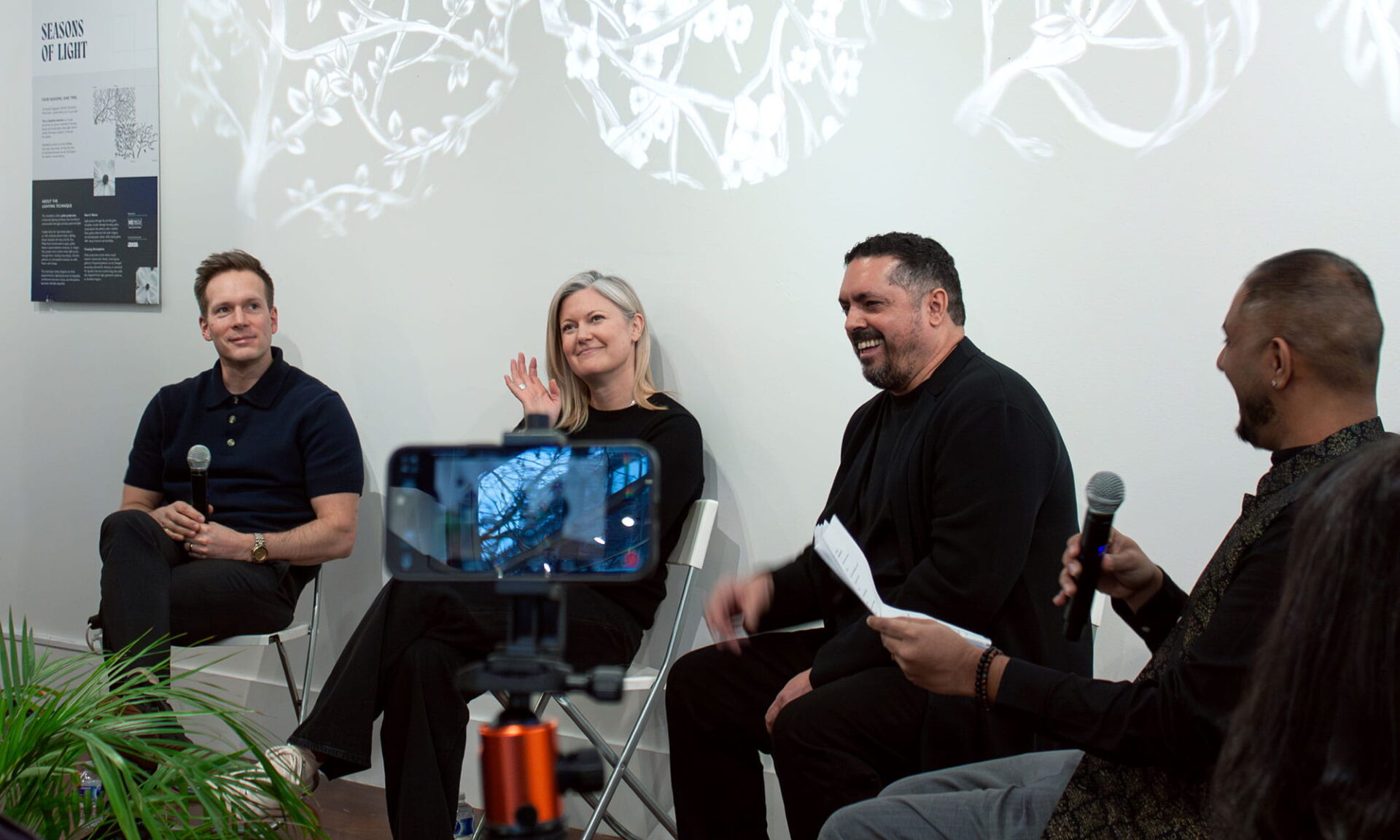
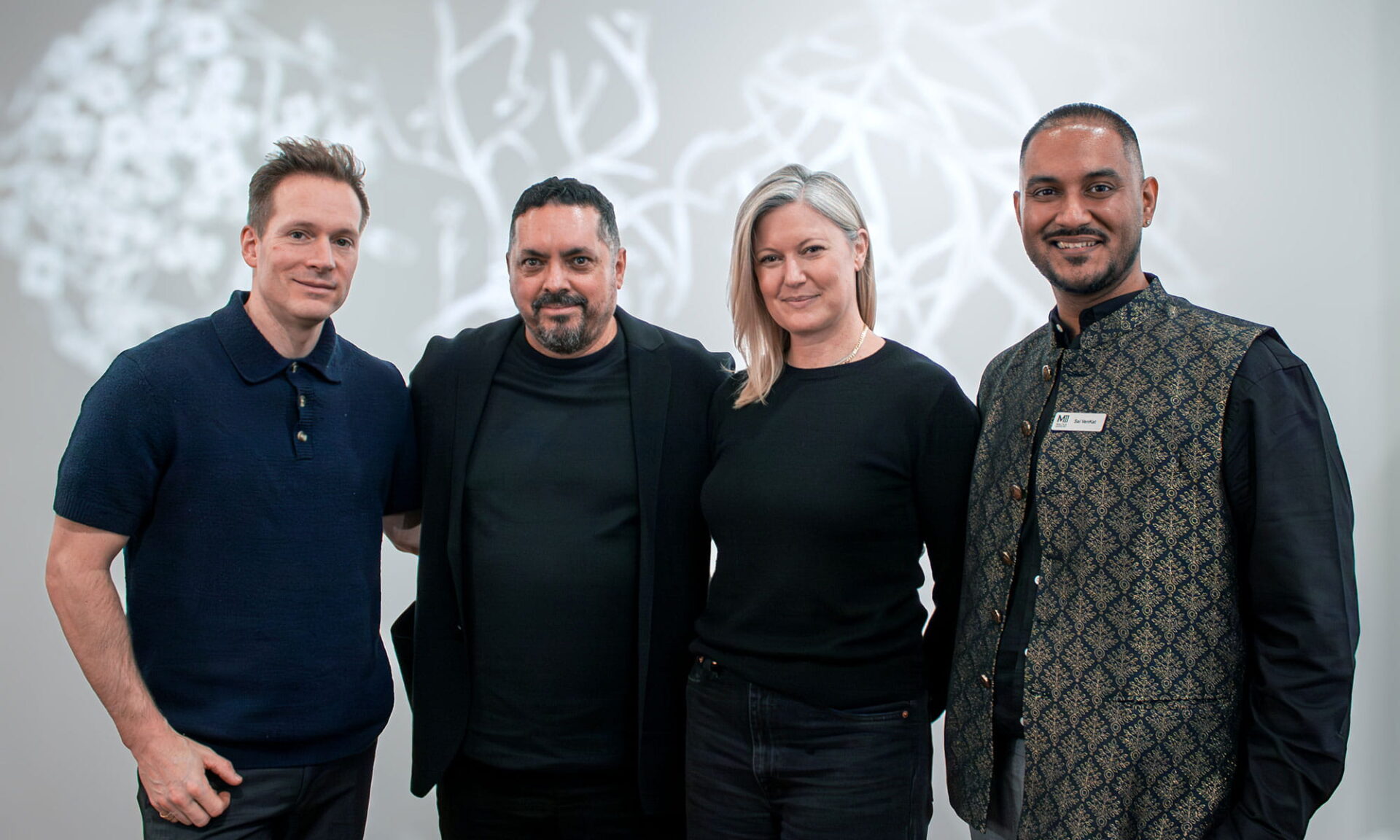
In this practical follow-up to our Lumorphéa panel, Who Moved My Light, we unpack key takeaways from Victor Quezada (AES), Andrea Greenway (Ste Marie Studio), and David Guenter (SHAPE Architecture), moderated by Sai Venkat (Mac’s II Agencies).
If you haven’t read the recap yet, start here: Who Moved My Light? The Unfiltered Truth About Coordination.
Before we dive in, what are we actually trying to protect?
David Guenter made the case that lighting is rarely “just functional.” Yes, we can label it as task lighting versus accent lighting, but the real power of light is that it’s theatrical: it sets the mood, gives you orientation, and tells you (subtly) how a space is meant to feel.
Sai echoed the same truth from the user perspective: people rarely notice good lighting—they notice when it’s wrong. When it’s done well, you simply feel good in the space. When it’s feels off, your eyes start hunting for the culprit (often an awkward fixture or an ugly exit sign that breaks an otherwise beautiful interior).
First, the big principle: protect the narrative, not just the fixture
Great projects have a story that holds together at every scale, site plan to doorknob detail.
When the story is clear, decisions get easier:
- What must not change because it is the concept?
- What can change without breaking the concept?
6 Moves that Protect Lighting Intent (Even When Budgets Shift)
1) Involve lighting early enough to influence the concept and the numbers
Waiting until late design phases turns lighting into a “decorative layer.”
Early involvement means the lighting strategy can be shaped to the architecture and interiors, and costed before it becomes a surprise.
2) Make ceiling coordination a real scope item—not an afterthought
Coordination doesn’t happen for free. If the timeline doesn’t allow the team to resolve conflicts, the ceiling will resolve them on its own, on site.
David Guenter shared one of the most honest “been there” moments of the night when Sai asked for a coordination lesson that still keeps them humble. Early in their career, David admitted they tried to solve lighting details through millwork and finishes, assuming the fixture could be “good enough.” It was a costly lesson: performance suffered, maintenance became a headache, and the illusion fell apart.
“I’d think, ‘Let’s just do a cheap light — the finishes around it will make it work.’ And it just didn’t work. Maintenance was a problem. The throw was terrible.” said David, “My coordination errors were holding onto this notion that the finishes around the fixture were more important than the fixture itself.”
The bigger point (and it’s a great one for any team working in ceilings): lighting designers obsess over the hard parts for a reason—mounting, throw, maintenance, driver location. When architects or interiors try to “solve” lighting through millwork alone, the ceiling becomes the battlefield.
David’s analogy landed because it’s so visual. Taking on fixture performance without the expertise, they said, is like trying to design a custom engagement ring without being a jeweller—someone who has spent a lifetime perfecting the craft.
It’s not a call to stay out of the conversation—it’s a call to stay in your lane while respecting the specialist work that makes great lighting actually function.
3) Build a shared “north star” document
Whether it’s a predesign deck, narrative brief, or concept package, the value is the same: a reference everyone can return to when the project starts to drift.
If there’s one quiet superpower in protecting design intent, it’s documentation, the kind that makes it harder for a project to “drift” without someone noticing.
4) Treat alternates like substitutions, not savings
A cheaper fixture is never “just cheaper.” It can change:
- Optics and glare
- Output and uniformity
- Colour quality
- Driver and maintenance access
- Longevity and consistency across batches
This is where the panel got especially real.
Victor captured the emotional side of it. They’ve spent “18 years getting knocked down on every single project,” because even when the concept is right, alternates and “helpful” substitutions can unravel it at the last minute.
But Andrea offered the tactical anecdote: when the lighting spec makes it through, and a shop drawing comes back with a sneak-substitution, there’s nothing Victor likes better than pointing to the contract and documentation and saying, “absolutely not.” Because when you have the review process written into the project, you have leverage.
And it isn’t just about “winning” a fight, it’s about protecting the experience. As Sai put it, sometimes there’s a perfect product for the perfect application… until budget pressures open up “that can of worms again.”
David summed up the principle behind all of it: they write specifications so alternates are “very rigorously reviewed,” and advocate strongly for lighting, because they’ve seen how quickly a space can fall apart when it’s poorly lit.
So when alternates are proposed, the question isn’t: “Is it less expensive?”
It’s: “Does it deliver the same experience and performance?”
5) Decide what you’re willing to flex, before you have to
Every project needs a hierarchy:
- What is sacred?
- What can shift if it protects the bigger concept?
When this hierarchy is defined early, value engineering becomes a design conversation instead of a panic.
6) Watch for “devolving” moments (the project often gets better, until it gets worse)
Design evolves. It gains sophistication as consultants contribute, details resolve, and drawings sharpen.
But there’s a tipping point where pressure causes the project to devolve. Protecting intent means spotting that moment early and pulling the team back to the narrative.
A real-world example: the late-stage pendant problem
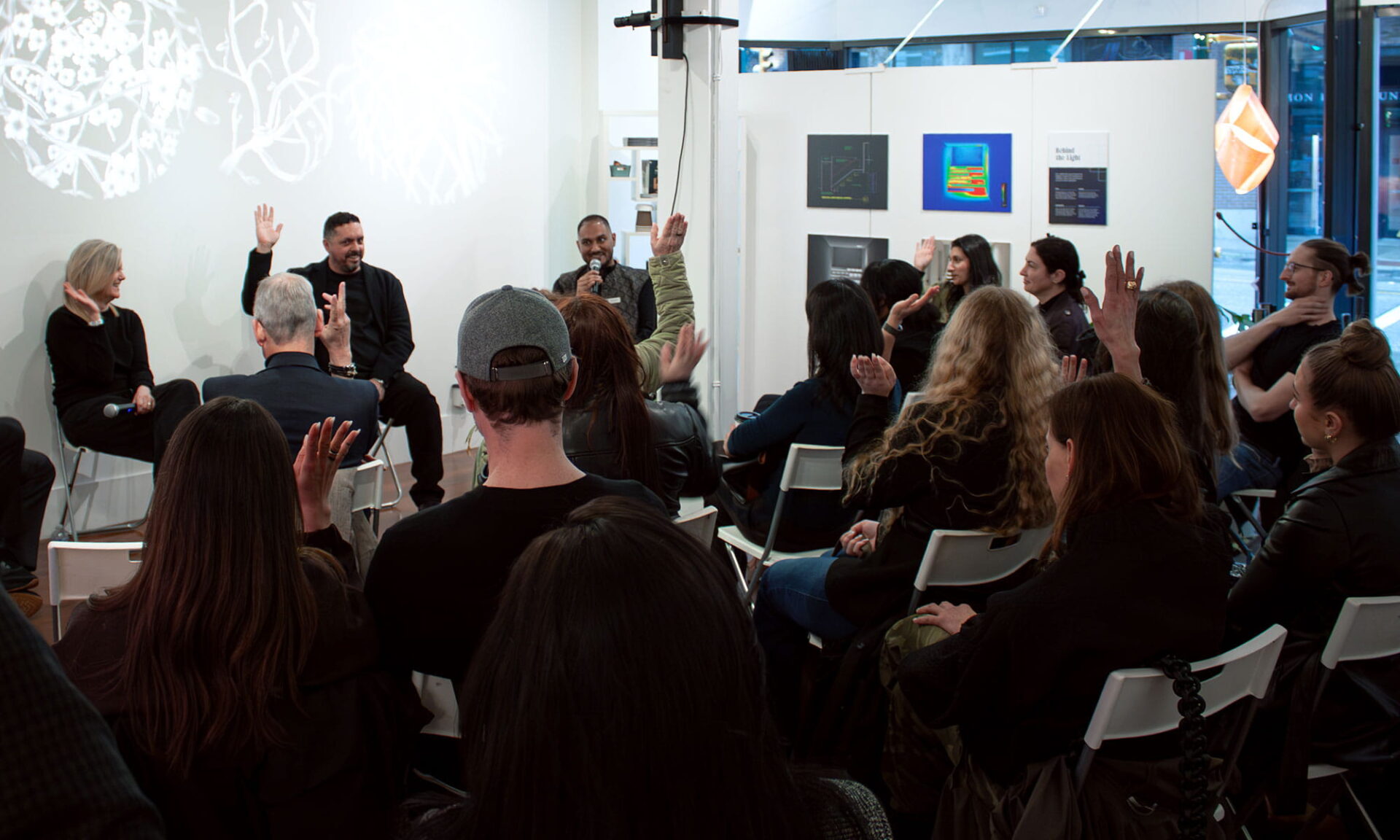
One audience member described a scenario every design team dreads: You’re at the finish line for a project. Furniture is in. The dining table and ten chairs are placed. Then someone notices the pendant is hanging in the wrong spot—and suddenly you’re weighing two terrible options: move the light, or replace the (very expensive) table. With occupancy tomorrow.
Victor’s first response was as practical as it was honest: “Swag it.” Andrea pushed the conversation to what matters in moments like this: stop the merry-go-round, make the decision, and move. Because once the finished work is in, “everyone has an opinion in the room”—and the longer you debate, the more expensive (and emotional) it gets.
It’s a small story with a big lesson: “early coordination” isn’t a slogan. It’s how you avoid last-minute decisions that no one wants to make.
Bottom line: protecting intent is a process, not a personality trait
You shouldn’t have to “fight” on every project. The goal is to create a process where the right decisions are easier to make than the wrong ones.

Working on a project where budget shifts or alternates are on the table?
Connect with Mac’s II Agencies early, we’ll help you evaluate options, protect performance, and keep the lighting aligned with the original intent.