Lumorphéa: Inside Vancouver’s Hands-On Designer Lighting Exhibition
Design is tactile.
And lighting, especially, asks to be experienced in three dimensions: how it lands on a surface, how it shifts mood across a room, and how materials respond when you move through a space.
That was the intention behind Lumorphéa.
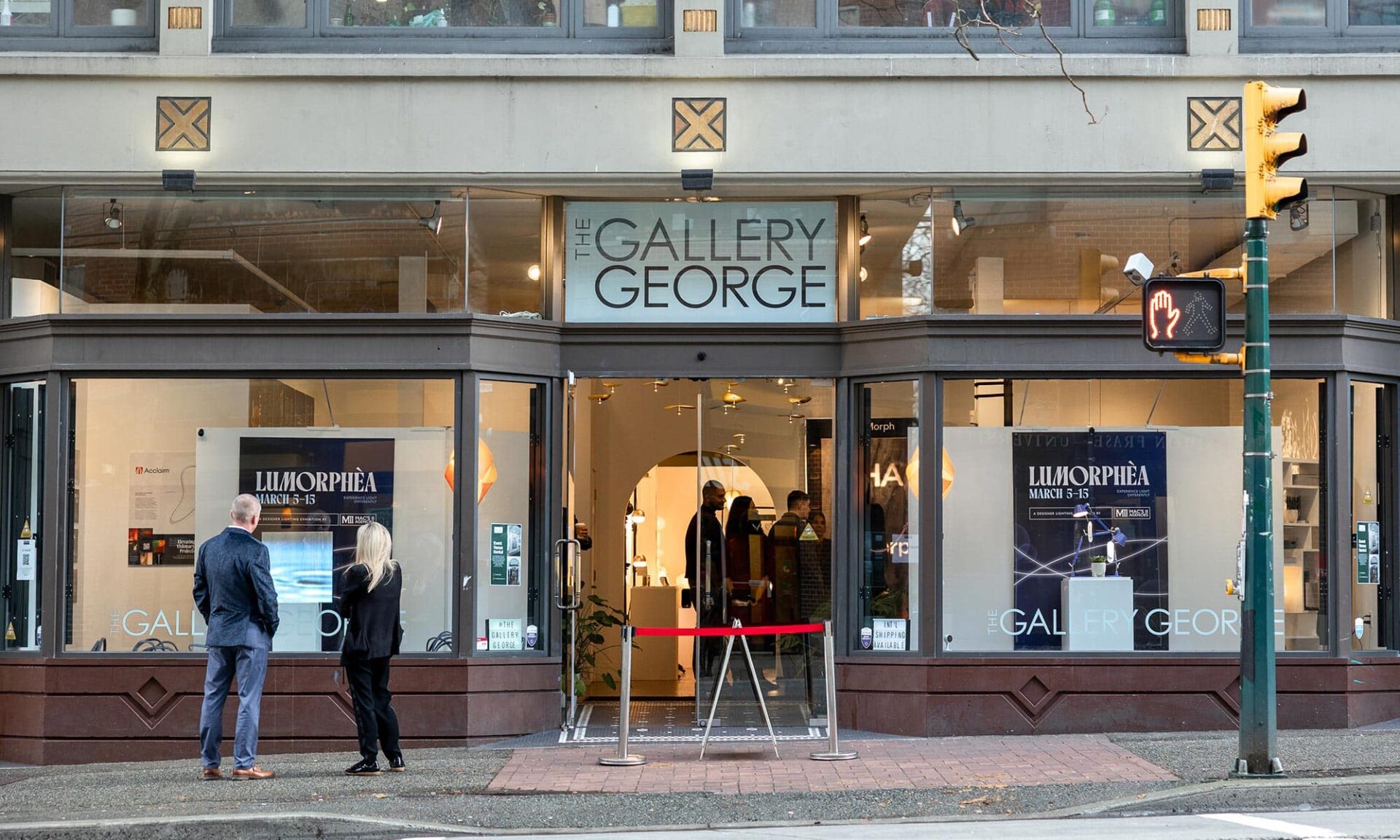
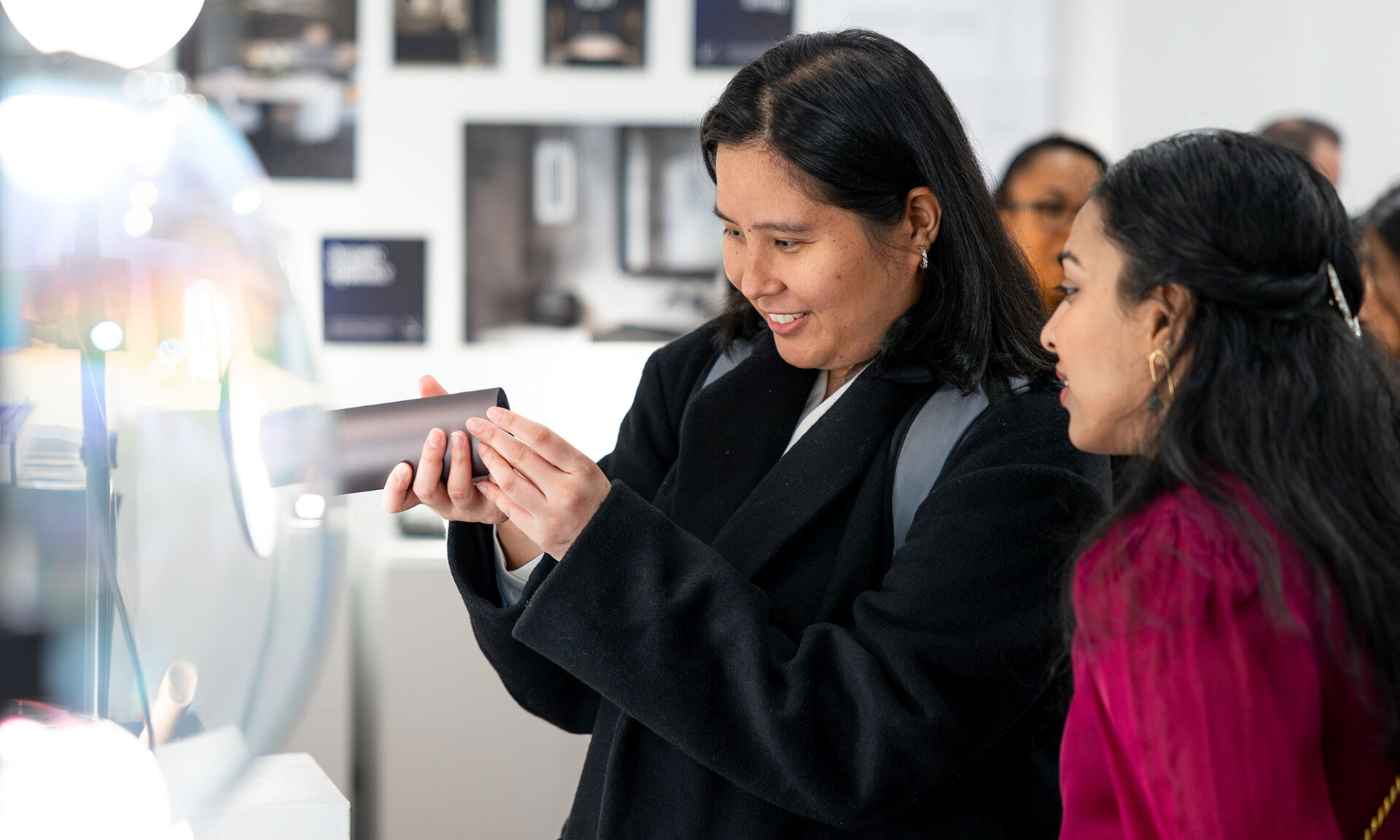
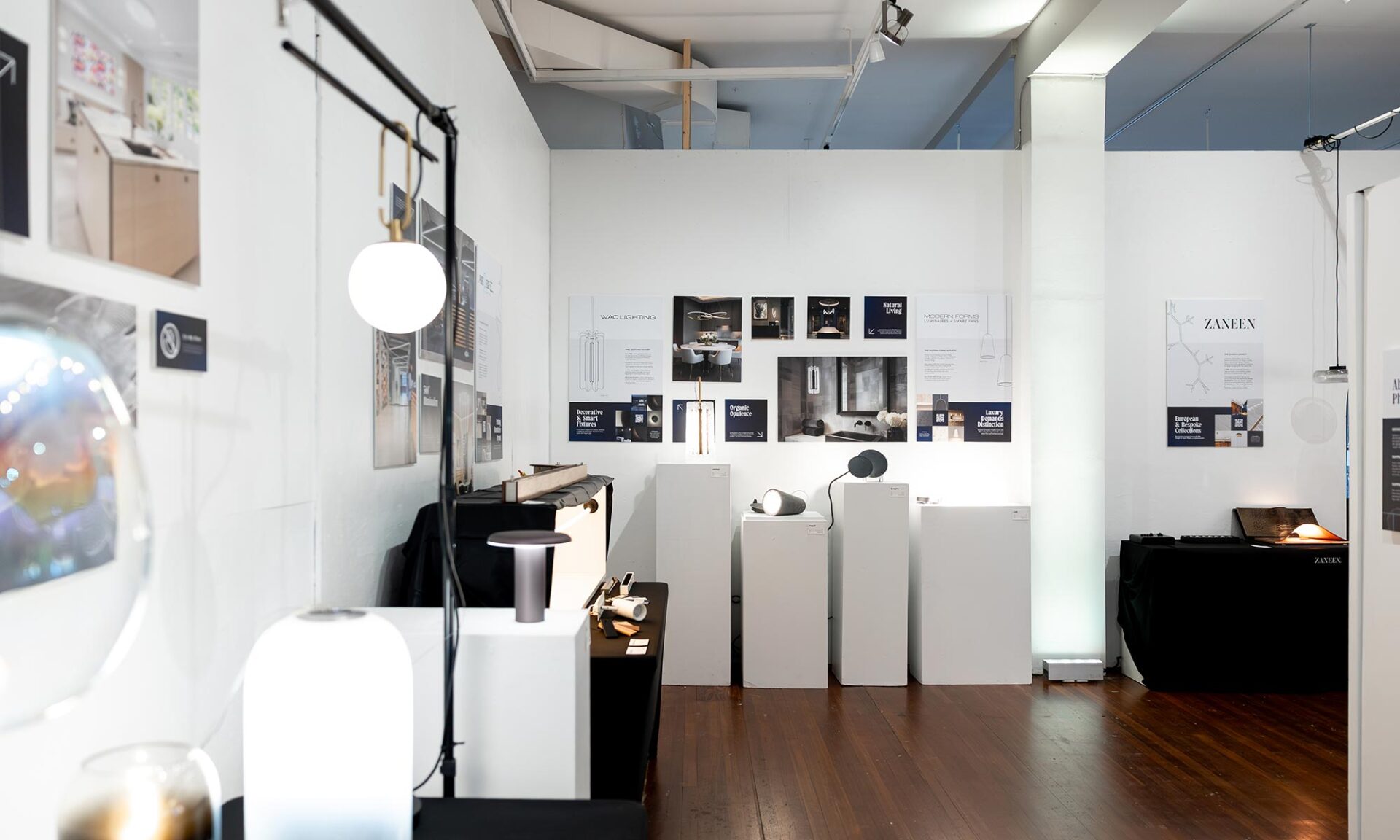
Held exclusively at The Gallery George in downtown Vancouver, this designer lighting exhibition by Mac’s II Agencies created an uncommon space for interior designers and lighting enthusiasts: a place to explore designer lighting brands not commonly seen in showrooms. It was designed to let the creative community touch finishes, inspect details up close, discover new options and techniques, and experience light as a living, breathing design element.
Across the two-week run, we welcomed 100+ designers and creative partners into the gallery, from long-time collaborators to first-time connections. The most repeated sentiment was simple:
“Being able to physically touch and feel the quality of the materials, not just look through a screen, makes a big difference. It’s refreshing.”
If you could not make it down, here is the official field guide to Lumorphéa: the experiences that shaped the gallery, and the brands and products designers kept circling back to.
The Gallery Experiences Explained
Seasons of Light
Biophilia, distilled into projection.
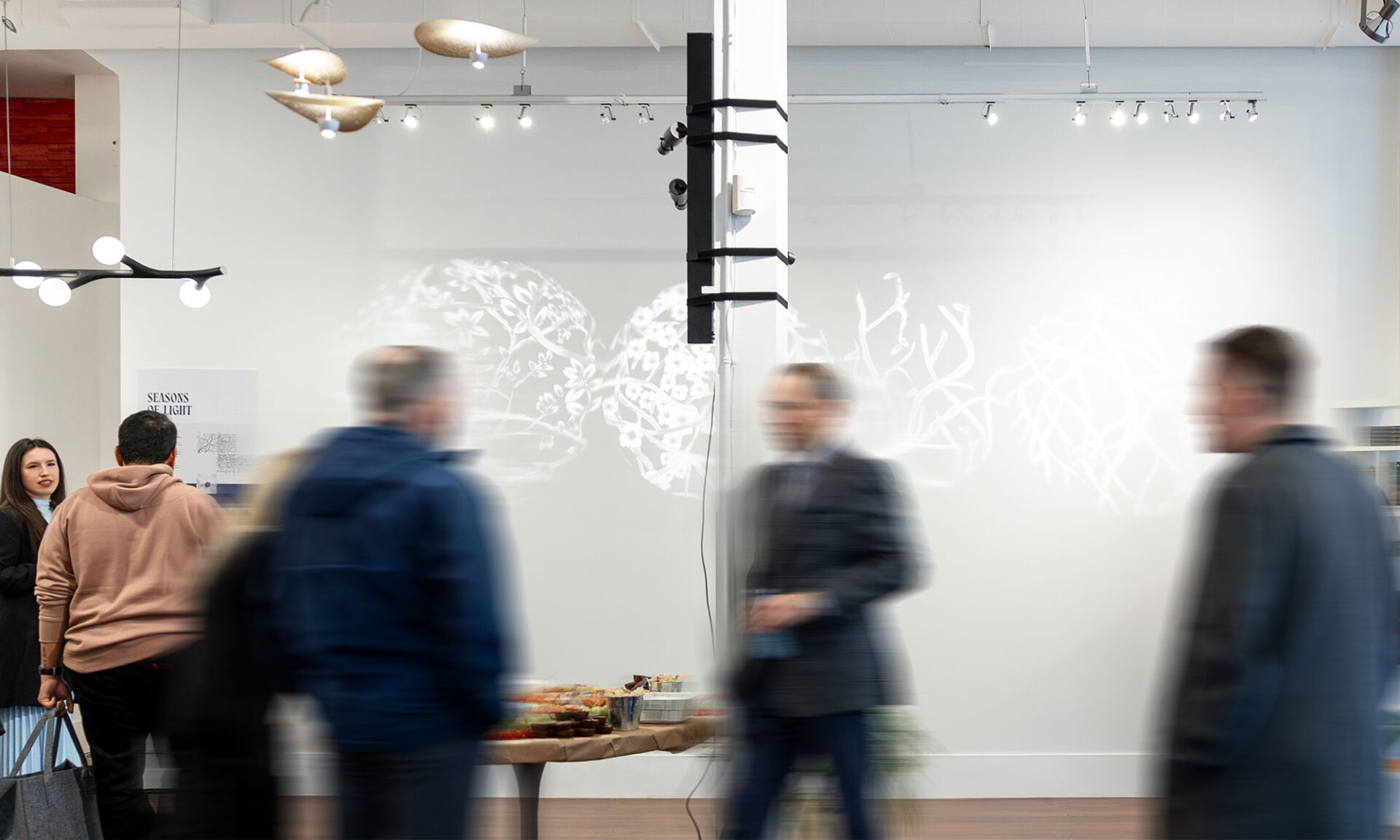
This installation reimagined nature’s cycle through four seasons, one tree: the Pacific Dogwood, interpreted in focused beams and etched glass.
The Pacific Dogwood is British Columbia’s official tree, but in the gallery it worked as something more than a regional reference point. It was a familiar symbol with real emotional weight: a quiet reminder of place, seasonality, and the way nature sets the cadence for how we live and build.
In other words, this is biophilia distilled.
Our innate connection to nature, rendered in focused beams and etched glass. Here, light doesn’t simply illuminate a subject, it becomes the subject.
The Pacific Dogwood artwork itself was hand-drawn by Mac’s II Agencies’ own Alex Webber, then translated into light. The result became a living forest, proving that even in built environments, we can hold space for nature in many forms.
The technique behind the magic was gobo projection, a theatrical approach that felt unexpectedly at home in an interior design conversation.
A gobo (short for “goes before optics”) is a thin template placed inside a fixture between the lamp and the lens. Made from etched metal or glass, it allows light to project crisp patterns, textures, or even full-colour imagery onto walls and floors.
It invited designers to think beyond the fixture. Lighting became scenography. Architecture became canvas. Atmosphere became adjustable.
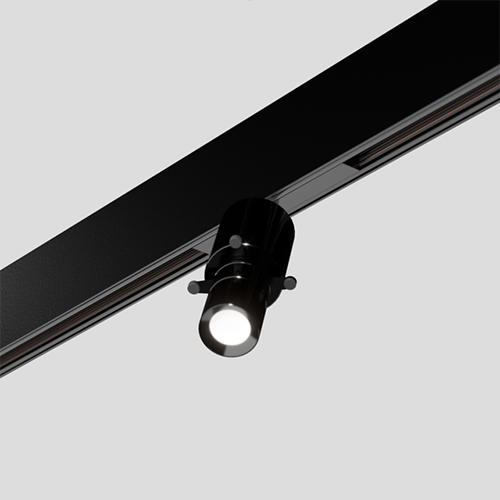
Framing Projector
Ideal for hospitality, retail, and gallery-like spaces, this projector lets designers “paint” with light. Use it to add patterned texture, create seasonal changeovers, or frame art with adjustable zoom. Add a custom GOBO to project brand elements or imagery with precision.
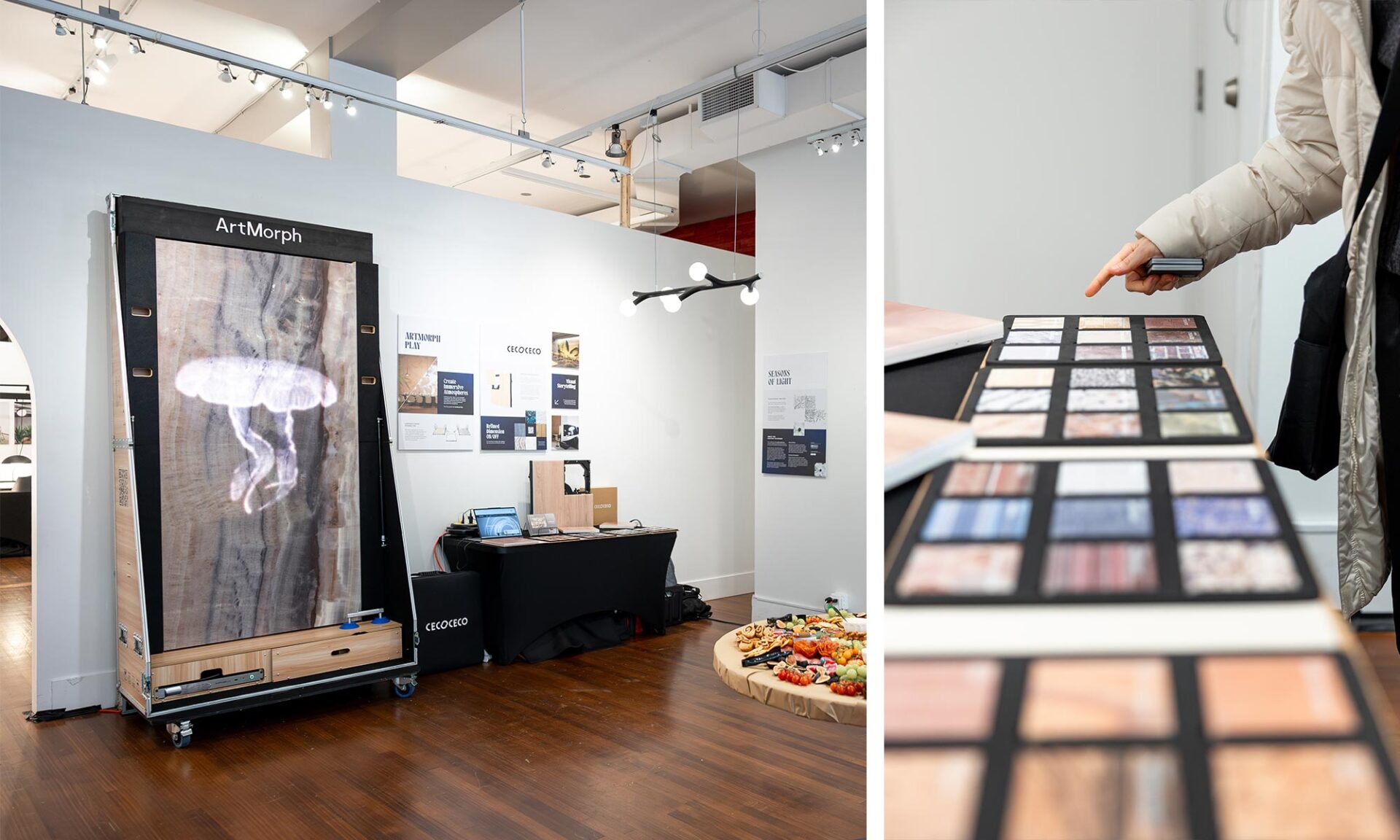
ArtMorph Play
When a wall becomes a living element.
The launch of CECOCECO was one of the most talked-about moments of the exhibition.
The ArtMorph luminous panel system blurs the boundary between architecture and art: textured surfaces that can visually disappear into an environment, then “wake up” with customizable artwork, animation, and atmospheric storytelling.
In person, the impact is immediate. Texture reads differently. Edges fall away. The wall shifts from material to mood.
Design Takeaways:
- Ideal for hospitality, retail, and experiential environments where surfaces need to do more than sit still.
- Flexible for seasonal changeovers, brand moments, or immersive storytelling.
- A new toolset for designers who think in layers: light + texture + narrative.
- One of the clearest signals of its impact was the shared response across disciplines. Designers and marketing teams alike left already mapping out where ArtMorph could belong next.
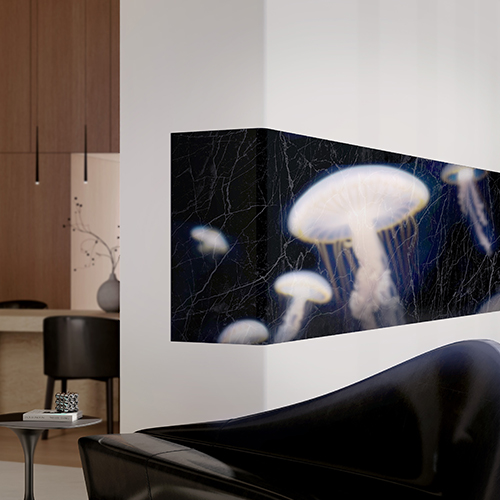
ArtMorph
A luminous panel system that blends tactile surface finishes with high-definition animated light, turning walls into adaptable design elements.
Texture and light are interchangeable, so the surface can read as quiet material one moment, then shift into artwork, motion, or atmosphere the next.
The Lumorphéa Collection
Nine carefully curated displays tell stories through pieces that command attention, spark emotion, and invite you to imagine the transformative power of light.
- Architectural Systems with Design-Forward Flexibility ft. Axis Lighting
- Handmade Statement Pieces with Sustainable Intention ft. LightArt
- Decorative with Architectural Discipline ft. Zaneen
- Handcrafted Ambiance that Reads Immediately In-Person ft. Kendila
- Icons and Innovation, Anchored in Design Culture ft. Artemide
- Integrated Approach ft. PureEdge Lighting
- Minimalist Luxury (and a Little Attitude) ft. WAC Lighting + Modern Forms
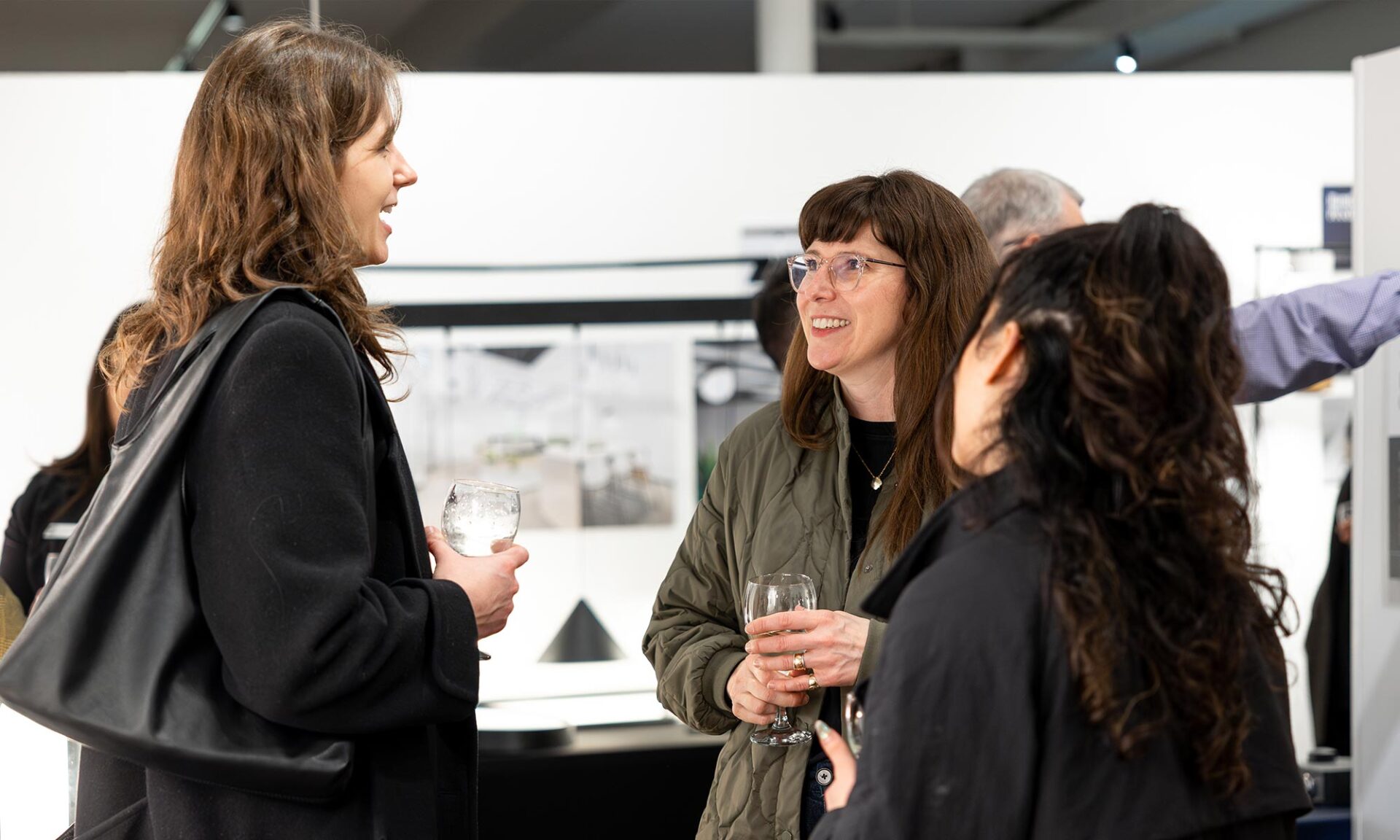
Architectural Systems with Design-Forward Flexibility ft. Axis Lighting
Axis showed how architectural lighting systems can be both precise and expressive, giving designers more control over rhythm, pattern, and integration of functional and decorative inserts.
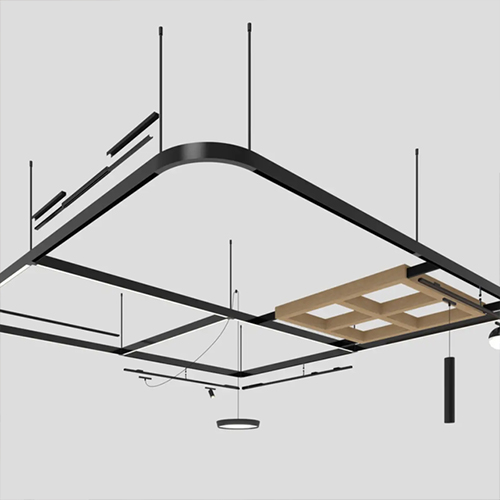
StencilFlex
StencilFlex is a scalable framework that sculpts light into architecture. Embedded within, or hovering beneath, exposed ceilings, it creates rhythm and intrigue while supporting true layered lighting: linear precision, decorative flourish, and even acoustic harmony.
For designers, the real pull is flexibility. The system becomes a foundation you can keep, then evolve over time through an array of decorative insert options.
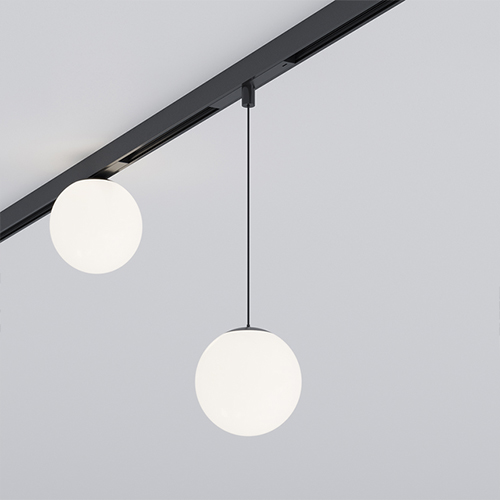
Decorative Insert: Orb
Orb is a small, sculptural moment that brings instant warmth.
A 5-inch frosted glass globe delivers soft, diffuse 360-degree illumination with beautiful uniformity. Available as a pendant or flush-mount, and offered in three elegant styles (Saddle, Flush, and Pendant), Orb makes it easy to add a decorative moment without losing system-level flexibility.
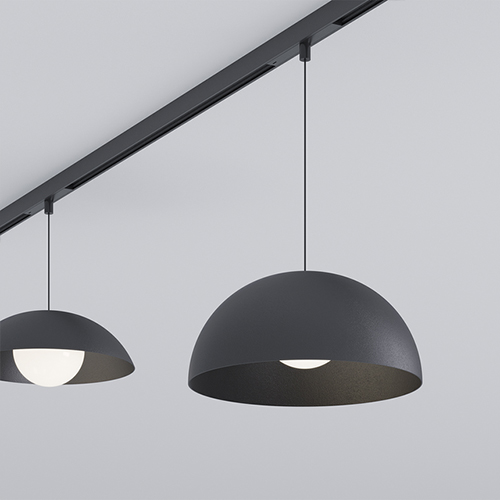
Decorative Insert: Shade
A softening layer, built for flexibility.
The Thread Shade Series brings a more decorative silhouette to the StencilFlex system, with three forms (bell, cone, and dome) and two size options for each. Available in standard black or white, and customizable to any colour, it gives designers a simple way to tune the look of the ceiling without overcomplicating the spec.
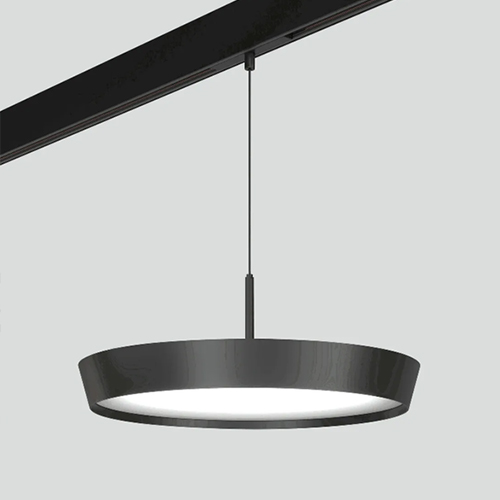
Decorative Insert: Helios Disk
A bright, comforting disk that reads clean in any ceiling.
With its sun-inspired profile and smooth frosted-lens optics, Helios Disk delivers direct, glare-free light that still feels soft and even across large areas. Designed as a refined alternative to a troffer, its tapered rim and regressed lens bring a little elegance to an otherwise utilitarian category.
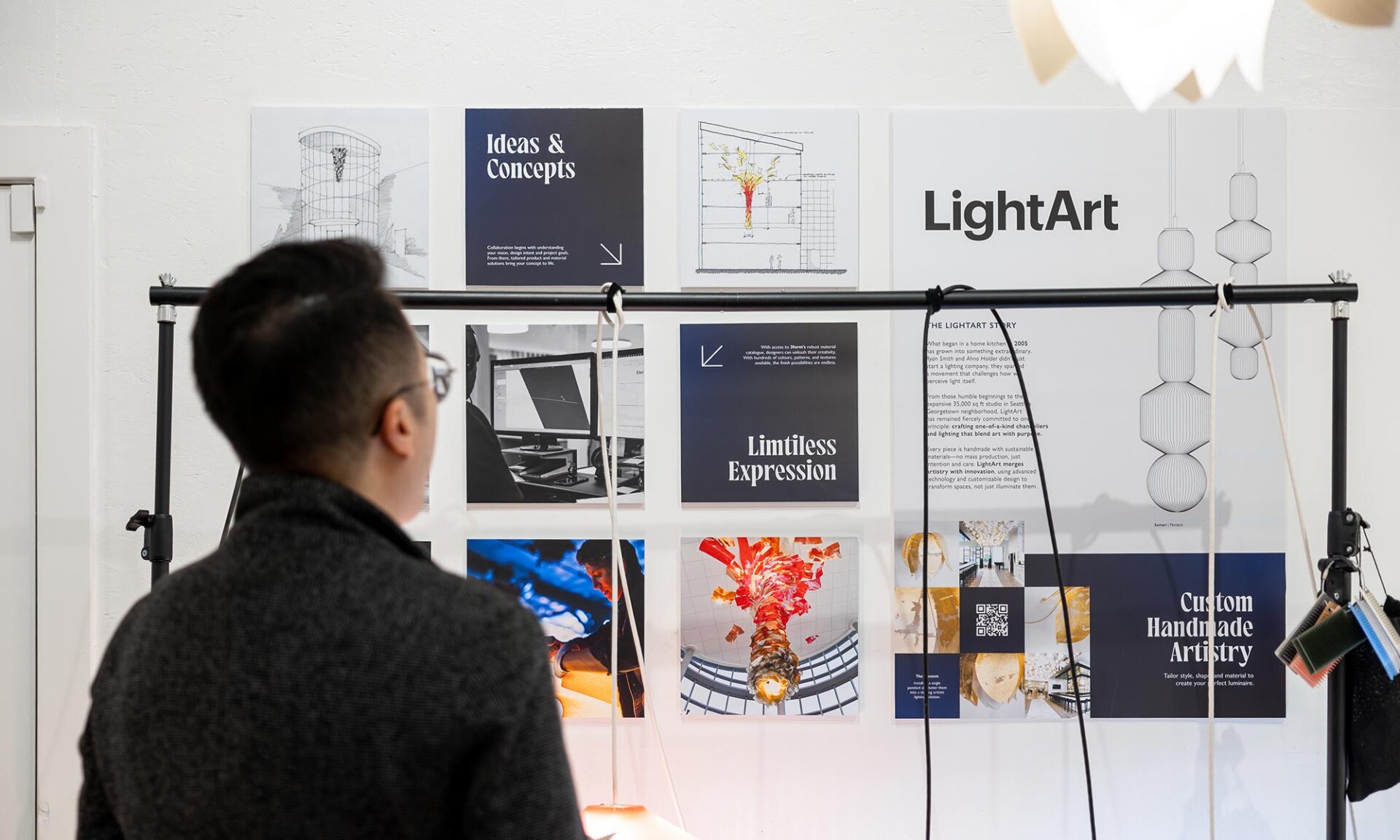
Handmade Statement Pieces with Sustainable Intention ft. LightArt
LightArt’s work reinforced a simple truth: statement lighting feels different when it is made with intention.
From their origin story to their commitment to handcrafted, sustainable materials, the brand’s presence is all about bringing artistry and creating statement pieces. It is especially suited to hospitality and residential projects where the fixture is the anchor, and to spaces that benefit from warmth, craft, and customization.
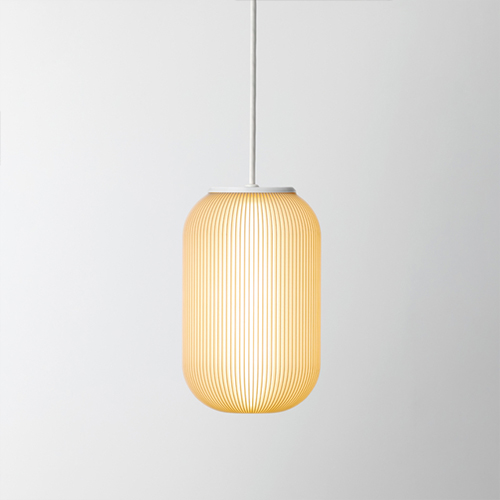
Somari Family
A modular family built for designers who think in composition.
Somari brings together sculptural form, luminous colour, and real versatility, with pendant, table, floor, and horizontal suspended configurations.
Available in three signature shapes (Sphere, Saucer, and Cylinder), it can be mixed, matched, and scaled to create anything from a quiet rhythm to a full statement moment.
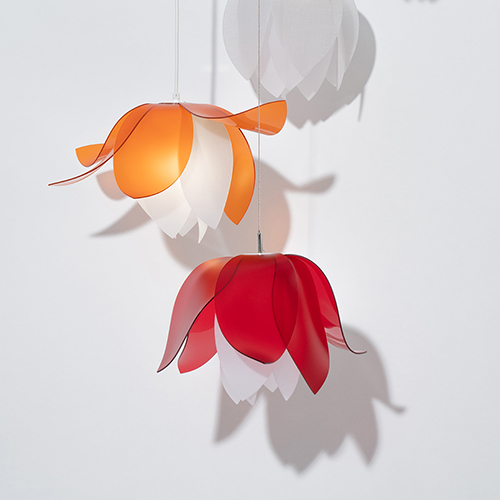
Blossom
A pendant that reads delicate, but is built to hold up.
Blossom can stand alone as a single fixture, or multiply into a clustered installation using simple, standard parts. Its fluttering “petals” are made from durable material, giving the piece softness without fragility.
Crafted in 3form Varia with a Translucent Suede diffuser, Blossom can also be customized across 3form’s 250+ material options to tune colour, texture, and mood.
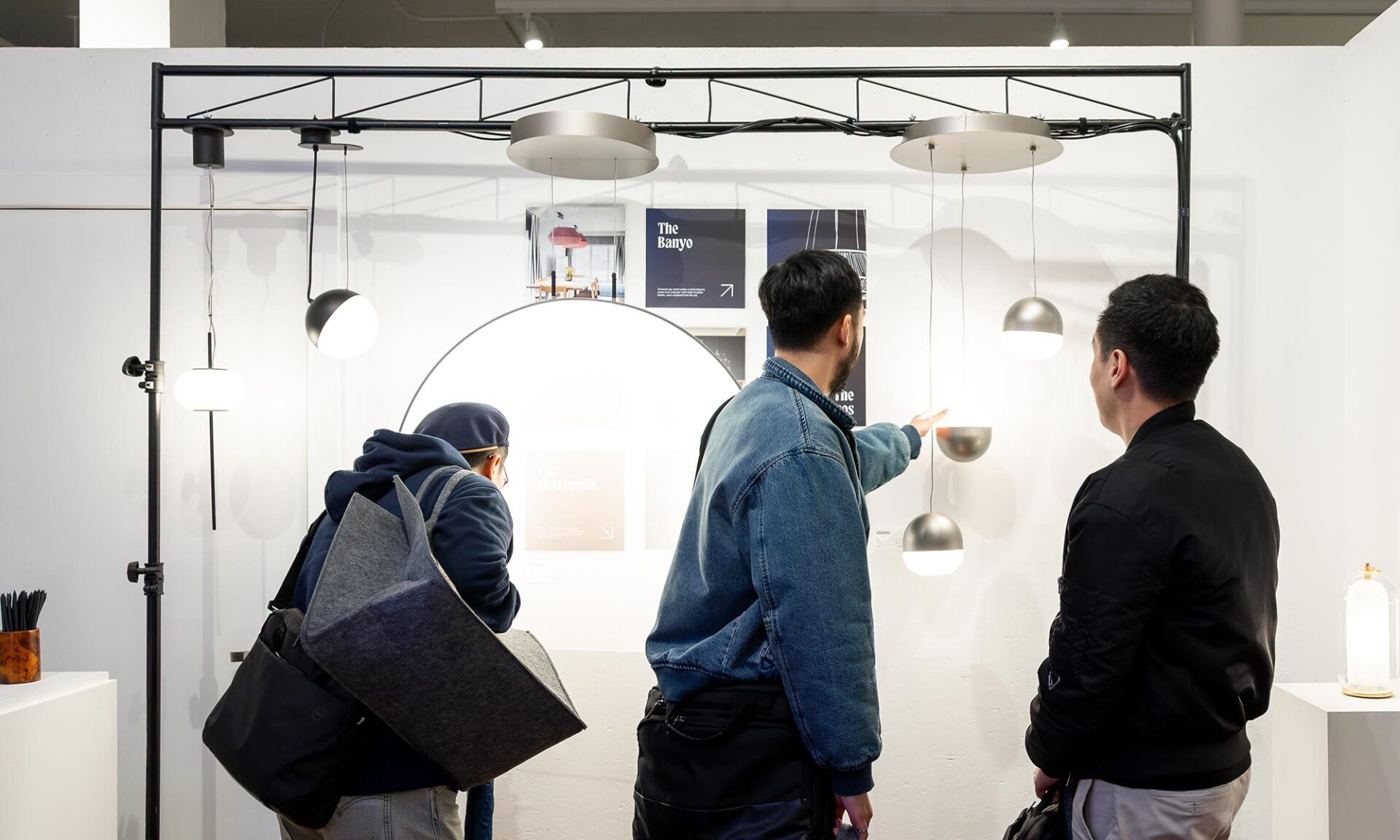
Decorative with Architectural Discipline ft. Zaneen
Zaneen brought a refined, European design lens, balancing sculptural presence with specification credibility. It is a natural fit for residential and boutique hospitality where detail is everything, and for projects that need decorative impact without compromising rigour.
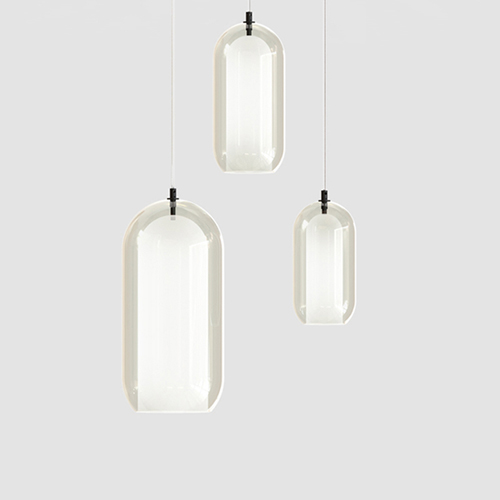
Aeron
A collection of handmade, blown-glass fixtures with a satin-finished inner chamber that diffuses light in a harmonious, natural way while reducing glare.
The outer surface stays transparent and comes in a range of colours, creating a captivating light effect in either a pendant or table lamp.
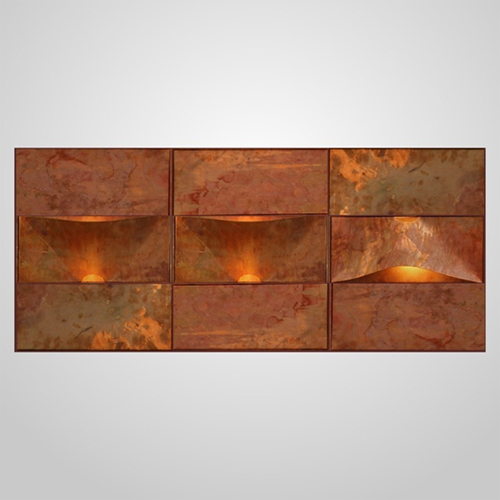
Lum
Think of Lum as an illuminated finish system: a wall you can compose, then re-compose, until it lands.
Installed horizontally, it pairs solid panels with integrated LED panels, letting you decide where the wall stays quiet and where it starts to glow.
Finishes range from warm metals like copper to tactile options like leather, so the surface reads as material first, light second.
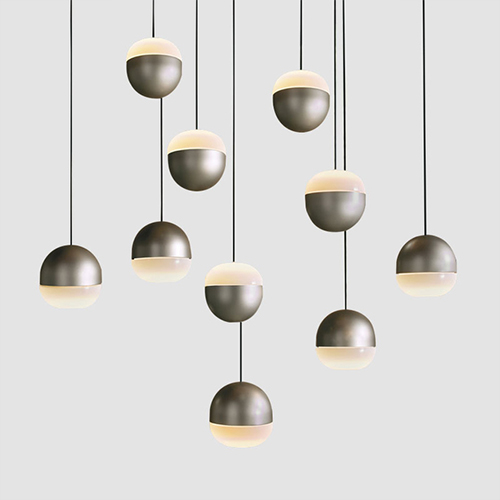
Ghianda
Named for the Italian word for acorn, Ghianda has that rare mix of softness and structure: a turned aluminum silhouette paired with a shaded opal diffuser that keeps the light refined, warm, and low-glare.
The family spans table, floor, and suspension options, including a modular suspension system when you want to build a bigger moment.
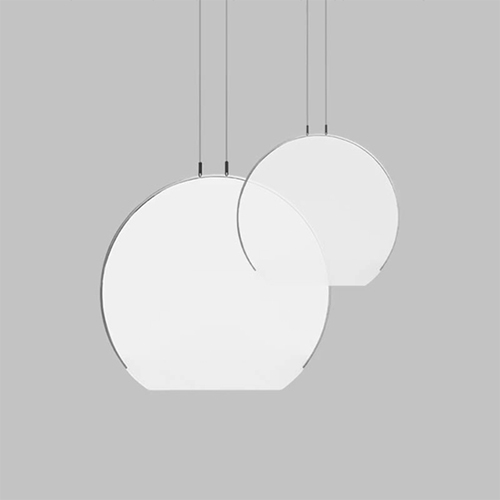
Ciondolo
Ciondolo started as an experiment, not a shape. The result is a suspension light that feels almost there—a near-transparent presence that lets the room stay the focus.
When it is off, it reads light and clear. When it turns on, the glass shifts from transparent to a soft satin glow, diffusing illumination without hard shadows.
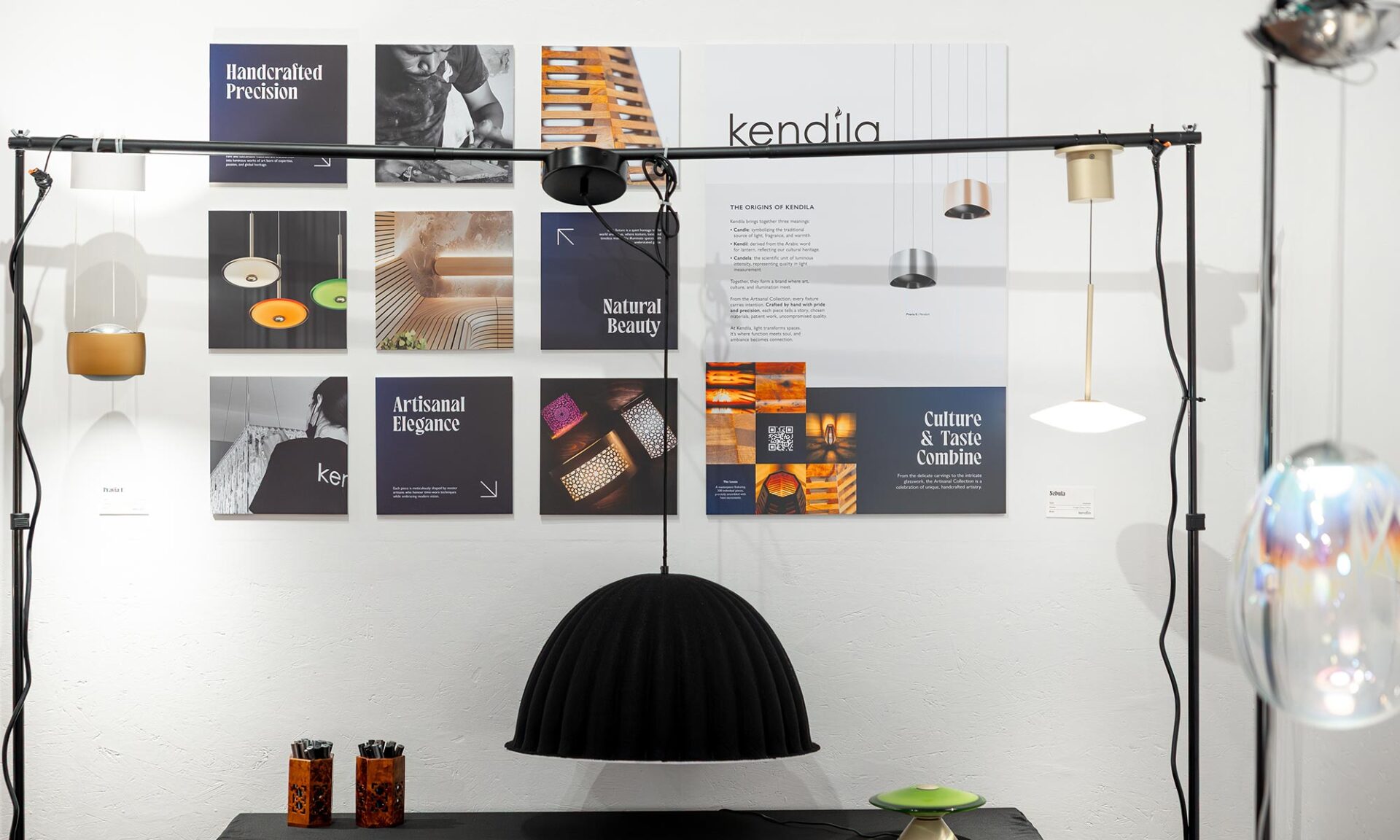
Handcrafted Ambiance that Reads Immediately In-Person ft. Kendila
Kendila’s artisanal work is the kind you feel right away: material nuance, craft, and warmth that does not translate fully through a screen. It shows up especially well in restaurants, lounges, and intimate retail settings, and in interiors where ambiance needs to feel human, not generic.
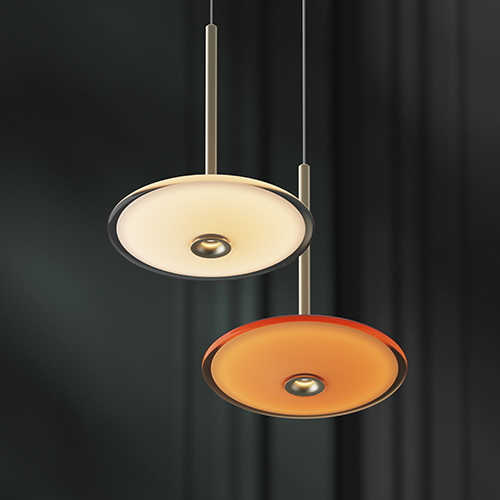
Nebula
Nebula is a glass pendant that brings colour into the room without getting loud.
The glow stays soft and ambient, with just enough presence to read as a design move. Plus, the height is adjustable, so it can sit low and intimate, or float higher when you want the light to feel more architectural.
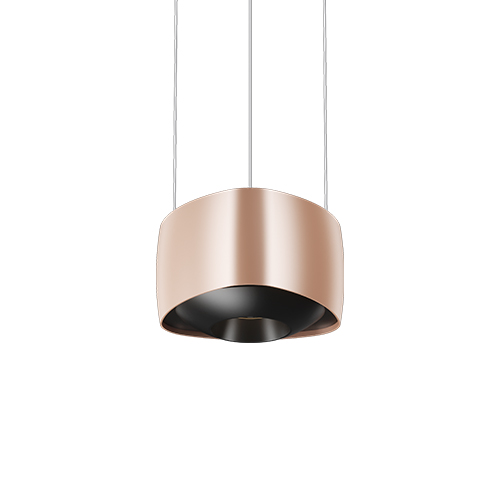
Pravia E
Light, distilled to its purest form.
A cylindrical pendant built on restraint, symmetry, and quiet presence. With direct and indirect output, it keeps the room soft above, and clear below.
Nothing is overstated. The proportions are intentional, the silhouette stays balanced, and the finish language stays true to Kendila’s refined simplicity.
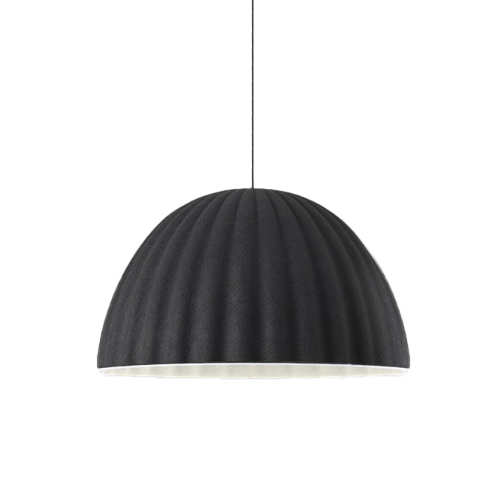
Umber
Umber is an acoustic pendant that does two jobs quietly, and well: it lights the room, and softens the room.
The dome form reads warm and architectural, while the acoustic build helps absorb the edge off busy spaces where sound tends to bounce.
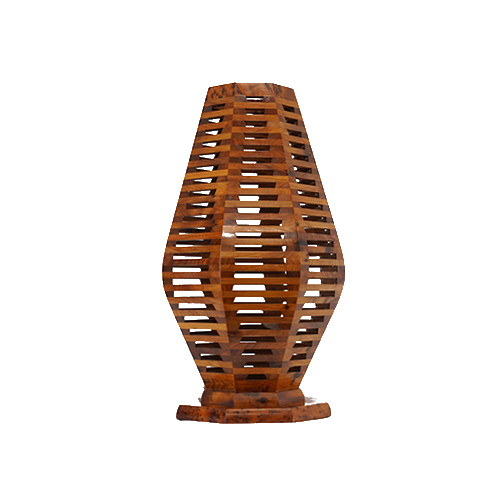
Louza
Louza is what happens when a light fixture is treated like a small piece of joinery.
Built from 200 individual components, assembled in 1 mm increments, it has the kind of precision you normally only notice in person.
Icons and Innovation, Anchored in Design Culture ft. Artemide
Artemide’s presence connected the exhibition to the broader design canon: pieces that carry narrative, and perform. It is the kind of work that fits naturally in residential, hospitality, and public-facing spaces where design language matters.
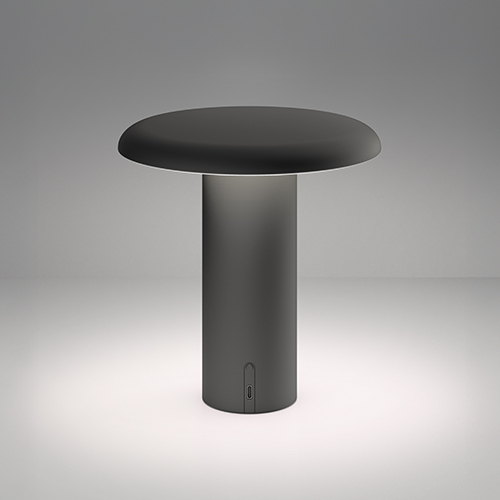
Takku
A portable, design-forward task light that moves cleanly between desk and downtime.
Takku’s head shapes a soft, diffused glow through a refined optical element underneath, giving you comfortable illumination without feeling clinical.
Set it to one of three brightness levels to match the moment, and count on up to 20 hours of cordless runtime when you want light that travels with you.
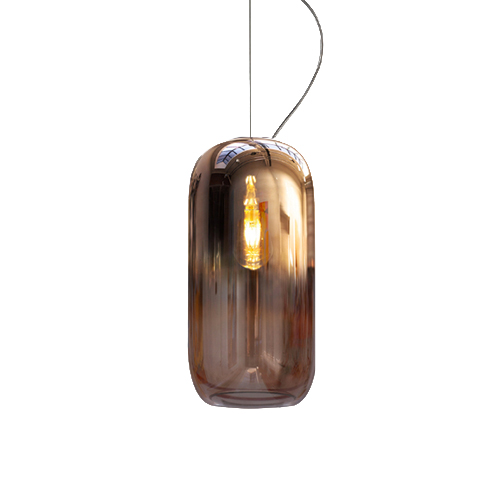
Gople
A hand-blown glass form with an elementary silhouette that lets the material do the talking.
In white, Gople is made using a traditional Venetian technique that fuses white glass with crystal during blowing, so each piece carries its own subtle variation.
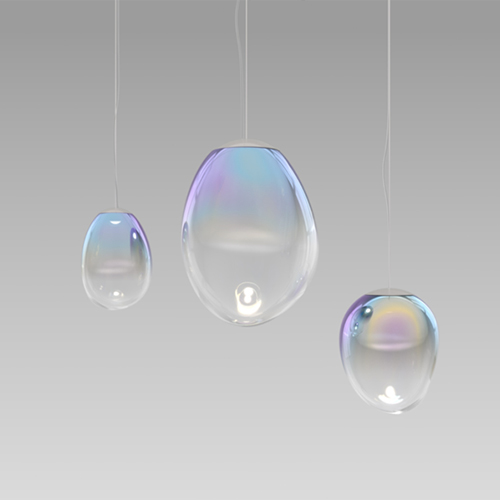
Stellar Nebula
Designed by BIG, Stellar Nebula is a family of glass lamps that treats craft and industry as collaborators, not opposites.
Each diffuser is glassblown into its own sculptural profile, then elevated with PVD finishing—a contemporary surface technique that gives the piece depth and presence while keeping the material story intact.
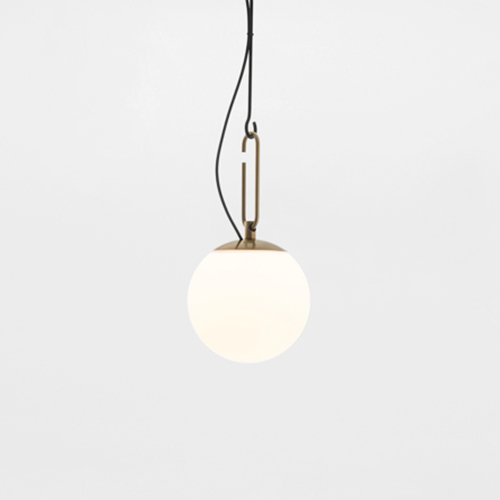
nh
A white, hand-blown glass sphere glides along a brushed-brass ring, letting the diffuser shift position and gently redirect the light.
That ring does more than frame the form. It becomes a support, a wall hook, or a handle—a small design decision that invites interaction instead of treating light like a fixed object.
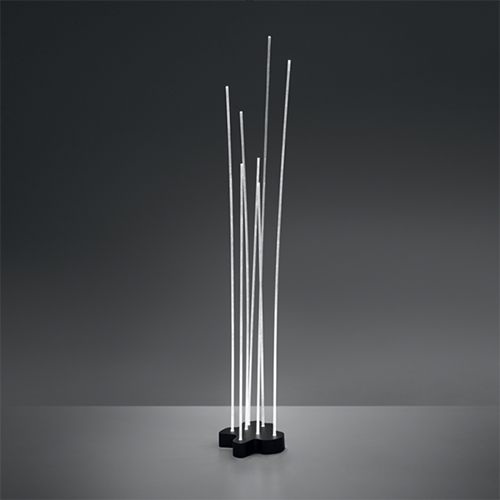
Reeds
Reeds is a modular installation that reads poetic, but specs like a system.
Seven flexible stems rise from a base like bamboo or aquatic reeds, carrying LED light upward with a soft, continuous glow that feels organic instead of engineered.
Integrated Approach ft. PureEdge Lighting
PureEdge approached lighting as something you shape, not something you simply pick. It delivers true lines of light with the kind of precision that holds up in the details: alignment, integration, and visual continuity. It is built for projects that need tailored lines of light, and for interiors where integration and detail control are non-negotiable.
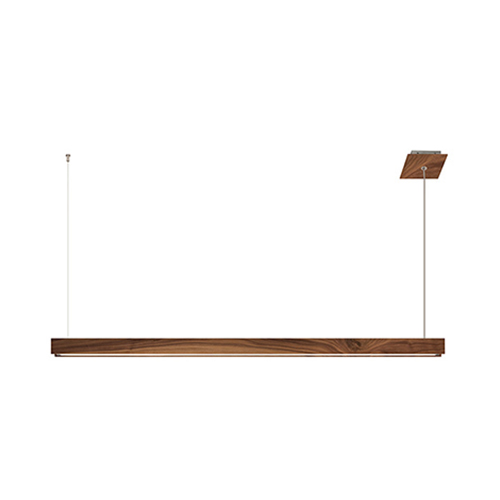
Glide Wood
Glide Wood is a line of light with a finish story you can actually feel.
The profile stays clean and architectural, but the body is genuine, hand-finished hardwood—so each fixture carries subtle grain and tonal variation that reads warm and refined in person.
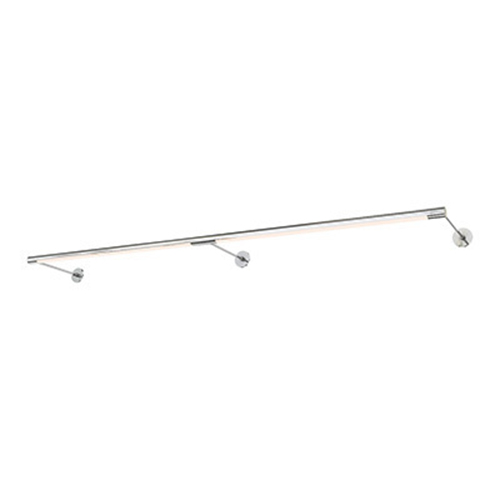
Pipeline Stem Mount
Pipeline is a wall wash you can tune.
Its patented, rotatable form gives you 360° of rotation, so you can fine-adjust the beam and keep a clean, uninterrupted stream of light exactly where it needs to land—wall, ceiling, or even tabletop applications.
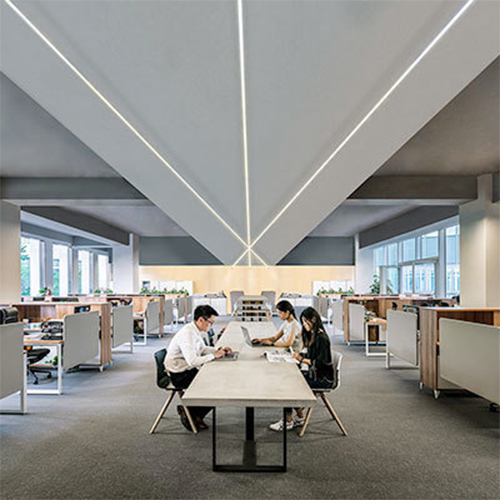
Lazer Line
Lazer Line is a line of light that refuses to stay flat.
Using slim turnbuckles and anchors, it can span wall-to-wall, ceiling-to-floor, or ceiling-to-wall, then tilt from 0–90° to create a subtle 3D tension—part illumination, part architectural gesture.
Minimalist Luxury (and a Little Attitude) ft. WAC Lighting + Modern Forms
WAC Lighting and Modern Forms brought finish-forward presence with a clean silhouette language. It is a strong fit for residential and multi-family work, and for projects that need consistent performance across many rooms. It also lands well in contemporary residential and hospitality spaces that want sculptural simplicity without feeling cold.
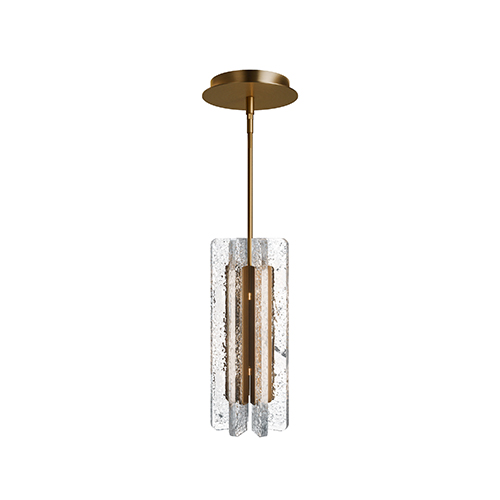
Cartridge
Inspired by industrial forms and elevated by modern craftsmanship, Cartridge makes a striking impression with its vertical column of textured cast acrylic.
Light dances through the sculptural body, creating a luminous statement that’s equal parts architectural and artistic.
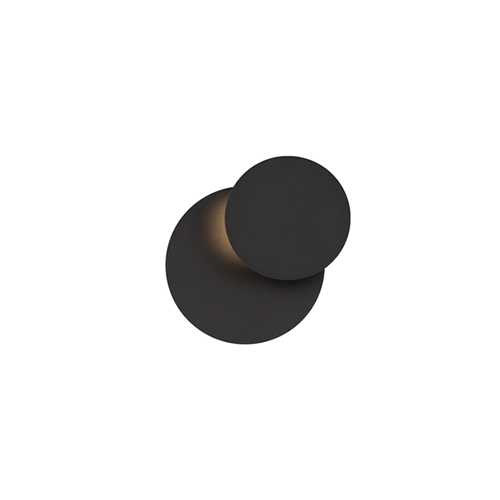
Moonglow
Like the full moon brightening the night sky, integrated LEDs light this luminaire’s circular band, anchoring the glowing shade while creating mesmerizing illumination.
As a wall sconce, the face moves—so you can create different “phases” of light and shift the mood from crisp halo to softer, crescent-like glow.
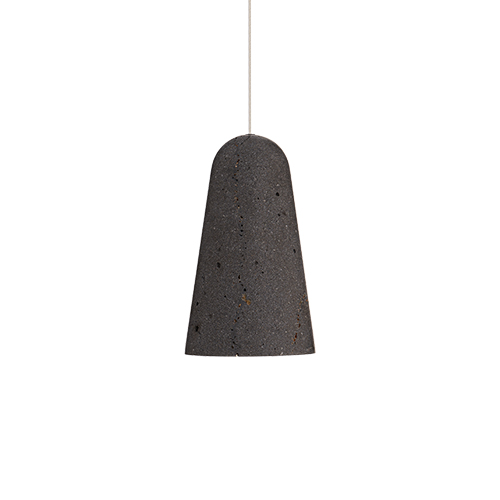
Pompeii
Pompeii is a pendant with a calm, elemental material story: a natural stone cap that gives the silhouette weight, warmth, and an organic sense of permanence.
Below, a diffused LED downlight delivers comfortable illumination, with adjustable colour temperature so the mood can shift from crisp and clean to softer and more residential.
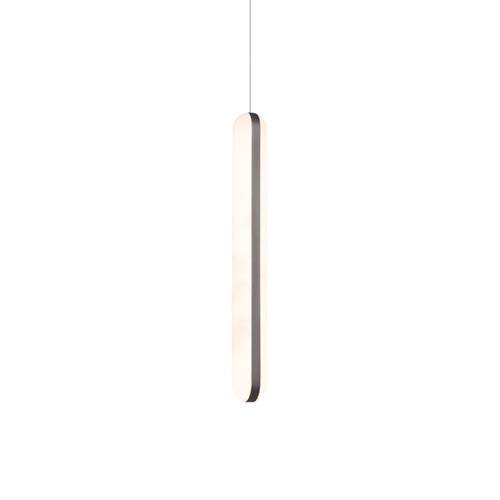
Cadiz
Cadiz is an organic pendant that lets the material lead.
A tall cylinder of Spanish alabaster radiates a rich, luminous glow, held in place by slender metallic straps that frame—rather than fight—the stone’s distinctive natural patterning.
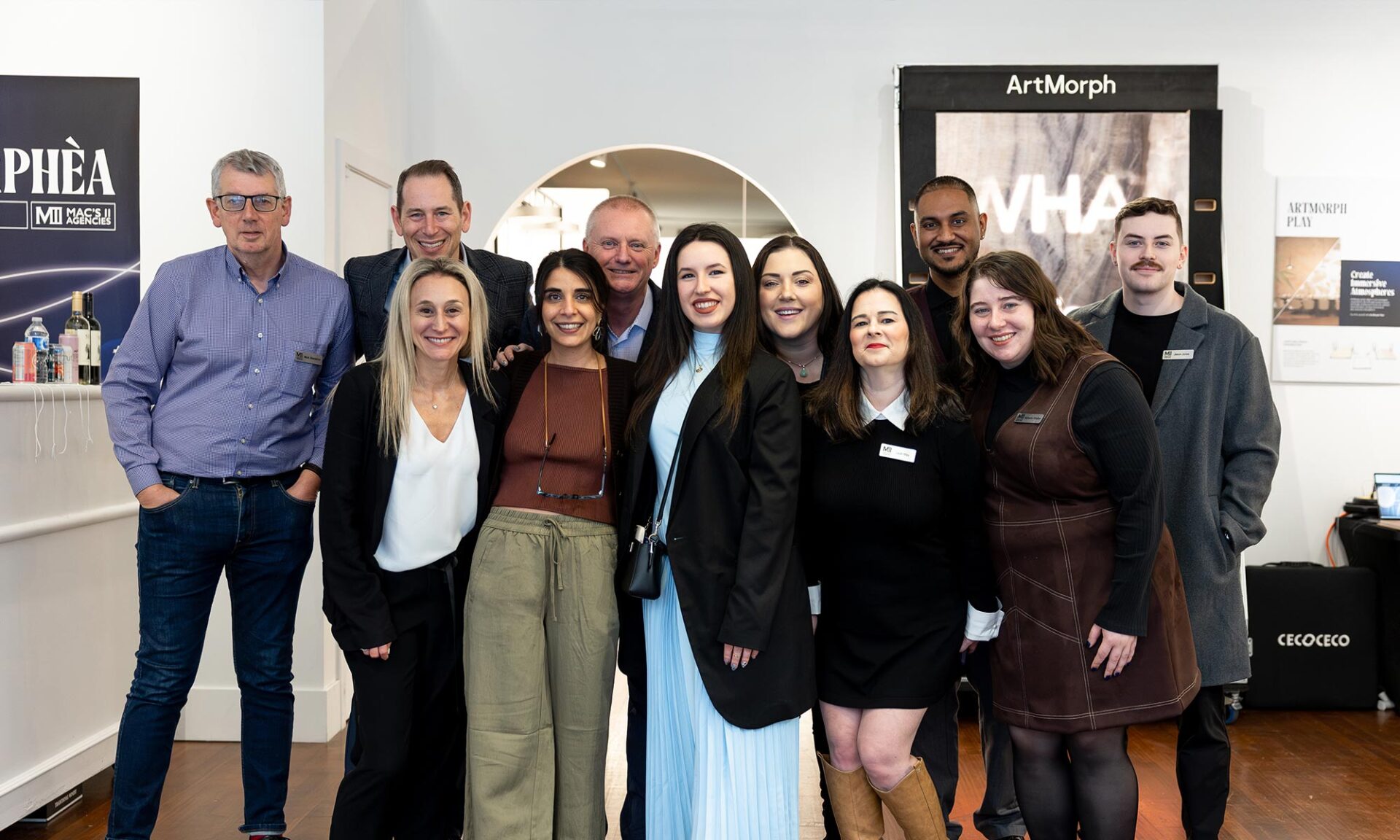
Supporting the BC Design Community
Lumorphéa existed because of British Columbia’s design community.
It was our way of saying thank you, and of creating a space where designers could actually experience lighting: to touch finishes, compare details up close, and feel how light transforms atmosphere and emotion in a way catalogues and Pinterest cannot.
Named for lumen (light) and morph (transformation), Lumorphéa treated illumination like an art form, presenting a curated collection from some of the world’s most visionary manufacturers and inviting the creative community to use lighting not as an afterthought, but as a primary design tool—supported by real partnership, collaboration, and access to the right brands when the details matter most.
Looking for more? Continue the Lumorphéa story with our companion recaps, featuring moments from the Lumorphéa panel, Who Moved My Light.
- Who Moved My Light? The Unfiltered Truth About Coordination.
- The Lighting Intent Playbook: 6 Moves to Prevent Late-Stage Compromises

Bring the “Hands-On” Part to your Project
Lumorphéa made one thing clear: the best lighting decisions happen when designers can actually experience the options.
The exhibition may be over, but the tactile part is still on the table.
If you want to compare finishes, review samples, or talk through real applications with a collaborative partner, we can happily bring samples to your office.